Introduction
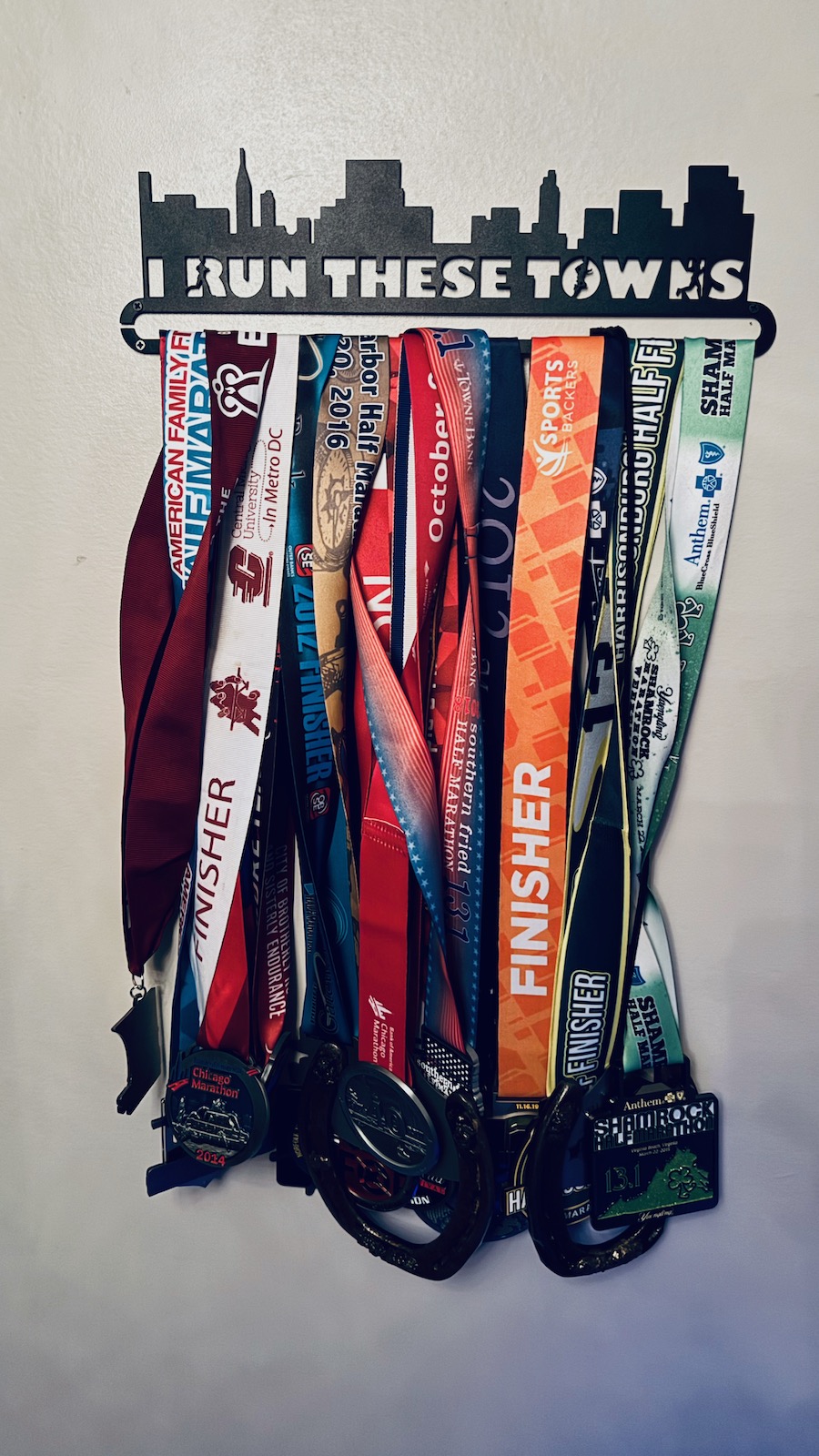
You might think an article like this is not needed, but there are so many ways a marathon race can turn upside down. Just ask anyone that has run distance races. It’s not just what you do on race day that matters but the days, weeks, and months leading up to that race day as well. All of the things you do or don’t do matter all the way to the finish line. Having run 3 marathons and 16 half marathons, I have experienced a lot of mistakes from training to actual race days mistakes. This will be a three part blog series covering Training, Taper/Pre-race, and the Race.
Disclaimer: this is just my own personal opinions as a runner based off my own experience. I am not claiming to be an elite professional runner. These are the lessons learned from personal mistakes.
Training Rules (Mine)
- Ramp miles up slowly. Lots of people will give you this advice, and I think it is true but how fast you ramp up is relative to your body. Some people can ramp up quicker than others, so it really comes down to you listening to your body. When you start marathon training, most people are probably going to try to run two or three 20-22 milers in training, and maybe have a training cycle or 12-20 weeks depending on your fitness level and your “base”, which I define as the longest distance you can run or did run recently. So plan accordingly. If you are currently able to run 2-3 miles without walking, make that your base and start from there. Also, if your training cycle is only 12 weeks, that’s going to be hard for many people to train correctly for a marathon. You will risk injury setbacks, and then you will need to rest, taking even more time away from training, which leads to a self-sabotaged race! Also if you are at that beginning level of 2-3 miles, don’t run 3 miles one Sunday and then try for 6-7 the next Sunday. That really is a great way to create an injury. If you need a training guide, there are so many on the internet. Find a decent training schedule to follow.
- Training schedules are guidelines only. I made the mistake of following a training schedule to rigidly, which led to injuries. This is where it is important to keep listening to your body as you train, because you are going to be doing a lot of running for months, and you want to avoid injury. If you feel like you need an extra rest day, take the rest day. You are fatigued or your legs or body are just screaming at you, take the rest day, believe me. And I mean occasionally you might need one, but you still need to train. I am not saying you miss 2-5 runs in a row, while you watch tv instead! That’s equally bad. The point is, if you are tired, your foot hurts, a muscle is super tight, something else hurts, instead of running, nurse that injury. The roads will still be there waiting for you.
- Do follow the schedule’s types of runs. What I mean by that is, your long run is a different type of run than a tempo run, or doing Yasso 800’s. These types of runs are preparing you for your race. Every time you go for a run, you should not be thinking , “I need to run as hard as I can!” Quite often your long runs will be slower or should be, because it helps build endurance. Tempo runs may have your running several miles at “race pace”, which is the pace you’re aiming for in the race. Trust the science on these types of runs and try to do them.
- Diet is super important. What you eat during training matters. You may have some rocky runs if you were eating cheeseburger/fries and washing it down with beer the day before. I refer to this as the “bloat run.” You’ll get through it, but it won’t be great! The day before a really long run, I try to hydrate sufficiently (but not overhydrate), abstain from alcohol, eat carb meals with some protein. Find the meals that work for you day before long runs because you will want to do the same exact thing the day before your actual race. You can still have beer and still eat cheeseburgers. It just a matter of when you do that (AFTER a run is perfect). Try to eat fruits, vegetables, lean proteins for the most part.
- Rest is also very important. Your body is going to be demanded to do a lot for 3-5 months, plus on race day, and it needs rest. Consider this part of your training. If you cannot handle a rest day, try to force yourself to do it. When your body is tired and not getting the rest it needs, that’s when injuries start to creep in. A tired muscle, tendons, ligaments, that never gets the rest it needs becomes overexerted, sore, inflamed, and injured. It can lead to stress fractures too. And then you will be resting, but for a much longer time or you will be hobbling through runs that are not helping you at all and making things worse.
- Hydrate and fuel as you plan to do in the race. Now is the time to experiment with energy gels, sports drinks, salt capsules, etc., not on the actual race day. For a marathon, you will not have enough glycogen stored to carry you through the entire race and you want the glycogen to last as long as possible (glycogen is your stored glucose that is usually the first source of energy for your muscles. Once it’s tapped out, your body relies on other sources, such as burning fat and proteins as energy). This is one of the reasons “hitting the wall” happens – depletion of glycogen. So you want to sustain it as long as possible and you can do that using energy gels and drinks. But the issue is, some energy might not agree with you. They might make you feel nauseous, so you need find the ones that work best for you while also getting used to it too. It’s also good to know what the race will be serving on race day. Train with that or consider carrying your own but carry enough for the whole race. I have used Gatorade endurance formula , which is what Chicago Marathon served the years I ran it. I also used Gatorade energy chews. Find what works for you.
- Stretch after runs, not before. Get a foam roller. Stretching before a run will not help too much. Muscles respond much better to stretching when they are warm like after a run. Stretching is one of the most important things you can do, but I must admit, I am not good at always remembering to do it after a run or wanting to do it. But stretching helps reduce lactic acid and soreness. The foam roller is what many call the “frenemy.” The goal of stretching should be to prevent injuries, not to treat injuries. If you only stretch after you’re injured, you waited too long to stretch.
- Know when you and cannot run through an injury. I have covered this in another post, but largely it depends on the injury. Is it a real injury or just soreness? Marathon training is pretty taxing on the body, so injuries happen. Be smart about when to run and when to rest.
- Run at the time of day that your race will be. If your race starts at 7AM, then you should be running at least your weekly long run around that time. This gives your body time to adjust to what race day will be like. You might be up 2-3 hours before the run, drinking coffee, eating, etc. Find out how much time you need to prepare and be ready for race start. Practice hydrating, what to eat for breakfast, etc. If you think your race will get hot in the middle of the race, practice running in higher temps too. If you can adjust to that, you will be find cooler temps even easier on race day. And if it is hot, you will still be prepared. I am not saying go run in 95 degrees! Use your own common sense with this and know your own limitations. I have run in 85-90 degrees, but I know my limits and distances to do for myself.
- Put a half marathon on the race schedule. When you are running in the 10-13+ mile range for your long runs, go ahead and put a half marathon race on the calendar. If breaks up the monotony of running the same route over and over every week. Enjoy some cheering from the crowd and earn a medal. Make marathon training fun. If you never ran a half marathon before, it is a preview of what’s to come. Treat it as a training run. You don’t need to “jog” it but you should not be going full force all out crazy running either. This race isn’t the end prize. If you don’t know if you can hold back and treat it as a training run, then maybe don’t sign up for an event. Because if you run harder than you would if it was a routine weekly long run, you are increasing the risk of injury and throwing off weeks of future training runs. It’s not worth it for a half marathon race. But, you should drink the post race beer and eat the food!
Conclusion
Hopefully this is helpful. If you are a seasoned marathon runner, maybe your experience has been different than mine. Comment below with your own tips or things I might have missed. I followed these rules in my last marathon race, and I only missed one training run due to being sick. To beginners, use this as a general guide and hopefully it is helpful. If anyone has questions, you can send me a message.